
The Smart Home Industry Has a Remote Control Problem
Why the Most Advanced Home are moving towards Simplicity
Published: June 2, 2026 Lekker Global Editorial Team
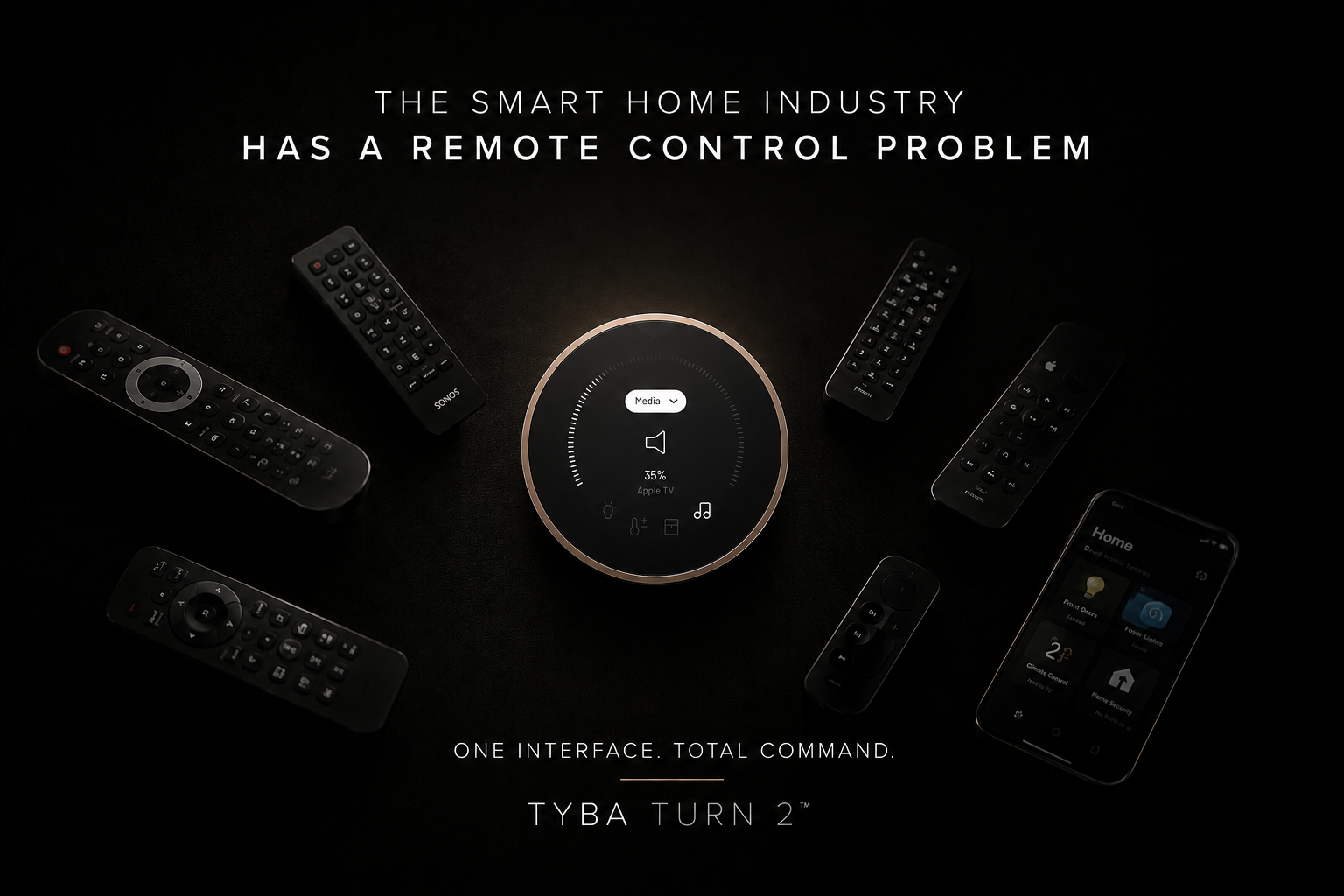
For decades, every new piece of technology arrived with its own controller.
A remote for the TV. A remote for the audio system. A remote for the blinds. A remote for the climate control.
Then came the smartphone, promising to solve the problem.
Instead, many homes simply replaced a collection of remotes with a collection of apps.
The result? The modern smart home often suffers from the very thing it was supposed to eliminate: complexity.
More Control, More Complexity
The purpose of home automation has always been simple: make everyday life easier.
Yet many homeowners still find themselves searching for the right remote, opening the right app, or remembering which interface controls which device.
In luxury environments, that experience feels increasingly out of place. Clients don't want more ways to control their homes.
They want fewer.
The Shift Towards Simplicity
As the custom integration market continues to mature, we're seeing a renewed focus on dedicated, purpose-built interfaces.
Not because today's systems are incapable, but because the best user experiences are often the simplest.
A single point of control.
An interaction that is immediate, intuitive, and always available.
The goal is not to add another interface. The goal is to remove the need for all the others.
Turn 2™ Approach
The Tyba Turn 2™ was designed around this philosophy.
Through a single tactile interface, users can control lighting, climate, media, and shading without reaching for multiple remotes or switching between applications.
Its weighted rotary dial provides a simple, intuitive interaction that feels natural from the very first use.
A Better User Experience
The future of the smart home isn't about providing more controllers.
It's about creating a better experience.
Fewer devices.
Fewer interfaces.
Fewer decisions.